


As South Africans prepare for the upcoming National Budget Speech, many households are bracing for possible changes that could affect food prices, transport costs and monthly bills.
While national fiscal decisions shape the broader economy, across communities a quieter system of financial planning has long been at work, stokvels.
For decades, stokvels have provided ordinary South Africans with a structured way to save, budget and manage household expenses. Industry estimates place the stokvel economy in the tens of billions of rand each year, with millions of members participating nationwide.
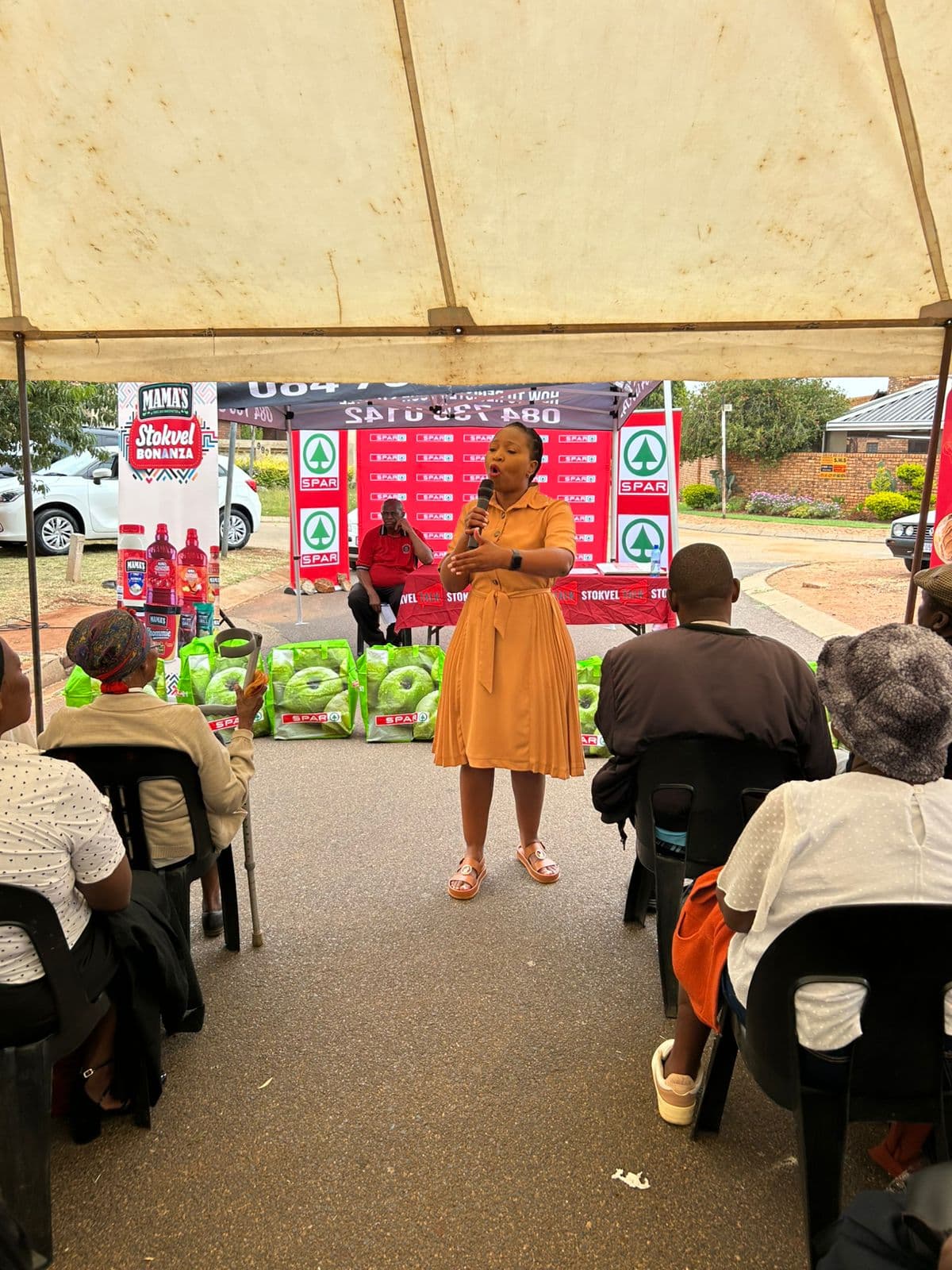
The importance of these community savings groups was highlighted at a recent Stokvel Talk event held in Vosloorus, where residents gathered to discuss structured saving, collective accountability and strategies for bulk buying. Retailer SPAR Group participated as a partner, focusing on how households can strengthen financial resilience through planning and informed purchasing.
Unlike individual saving, stokvels operate on agreed rules and shared goals. Members contribute fixed amounts each month and follow predetermined payout cycles, often planning well in advance for bulk grocery purchases or major household needs.
Spending decisions are made collectively and contributions are tracked openly. This group structure encourages discipline because members are accountable not only to themselves but also to one another.
At the Vosloorus event, SPAR National PR, Communications and Sponsorship Manager Mpudi Maubane emphasised the value of consistent planning during uncertain times.
“In periods of economic uncertainty, the households that fare best are those that plan consistently rather than reactively,” Maubane said. “What stokvels demonstrate is that financial discipline becomes more sustainable when it is shared.”
He added that retailers play an important role by ensuring stable pricing, strong supplier relationships and reliable stock availability, factors that directly affect household budgets.
From producers and suppliers to distribution centres and stores, each step in the supply chain influences what customers ultimately pay at the till. When the system operates efficiently, consumers benefit from fewer shortages and more stable prices.
For stokvel members who buy in bulk, even small price increases can significantly raise total spending. By coordinating purchases, tracking promotional cycles and planning ahead, groups are often able to stretch their contributions further than individual shoppers.
As national economic debates intensify, stokvels remain a practical example of financial resilience at grassroots level. Through regular saving, shared responsibility and coordinated spending, communities continue to build stability from the ground up, demonstrating that collective budgeting remains one of South Africa’s most effective tools for managing hard times.
For more, please visit the Spar group.