

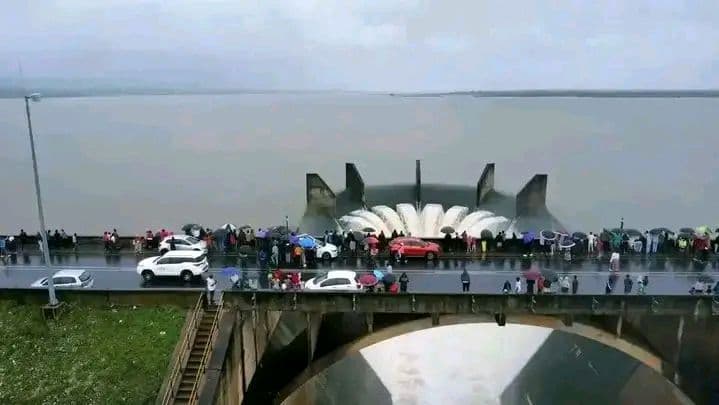
The Nwamanungu Dam, formerly known as Middle Letaba or Stekrevier Dam, is overflowing for the first time in 26 years following heavy rains across parts of Limpopo.
The dam, located on the Middle Letaba River about 40km east of Elim and 40km west of Giyani, serves irrigation and domestic needs for surrounding communities.
The rare sight has drawn scores of visitors who have been flocking to the dam to witness water spilling over the wall since Sunday, 15 March. Residents and travellers have been stopping at viewpoints around the dam to watch the dramatic scene and capture photos and videos. Some say they have never seen the dam overflow before.
The dam has historically struggled with low levels and has rarely reached full capacity since it was completed in 1984. In May 2025, water levels were critically low at about 8%.
But while the overflowing dam has become a tourist attraction, it also highlights a difficult reality faced by many communities across the province. Despite the presence of large dams and rivers, many households still struggle to access reliable drinking water.
In some parts of Limpopo, residents collect water from natural fountains for daily use. Others buy water from people who have drilled their own boreholes for about R3 per container. Some households also pay around R350 to private sellers to refill water tanks when their supply runs out.
Communities have also raised concerns about large water infrastructure projects meant to improve supply. Projects such as the Giyani Bulk Water Project and the Nandoni Bulk Water Project have cost the government millions of rand. However, residents say reliable water supply remains a challenge in several areas.
Some residents claim that these projects have mainly benefited tenderpreneurs and politicians, while many communities still struggle to access clean drinking water. Many say it is frustrating to see dams full while taps in their homes remain dry.
For now, the overflowing Nwamanungu Dam continues to attract visitors eager to witness a rare moment that many say they may not see again for years.